Without rate cuts and economic stability to stir labor market activity, the industry’s recovery will continue to idle.
Max Aldrich

Without rate cuts and economic stability to stir labor market activity, the industry’s recovery will continue to idle.
The June jobs report released last Friday exceeded experts’ expectations: The economy added 147,000 nonfarm payroll jobs last month, above the anticipated 110,000, and noted upward revisions in previous months, as well. This reading, together with the rebound in total job openings recorded in May, signals that the overall labor market is holding steady despite facing economic headwinds. While at first glance this is good news for the economy, it is not all perfectly clear-cut and even highlights persistent challenges for the industry.
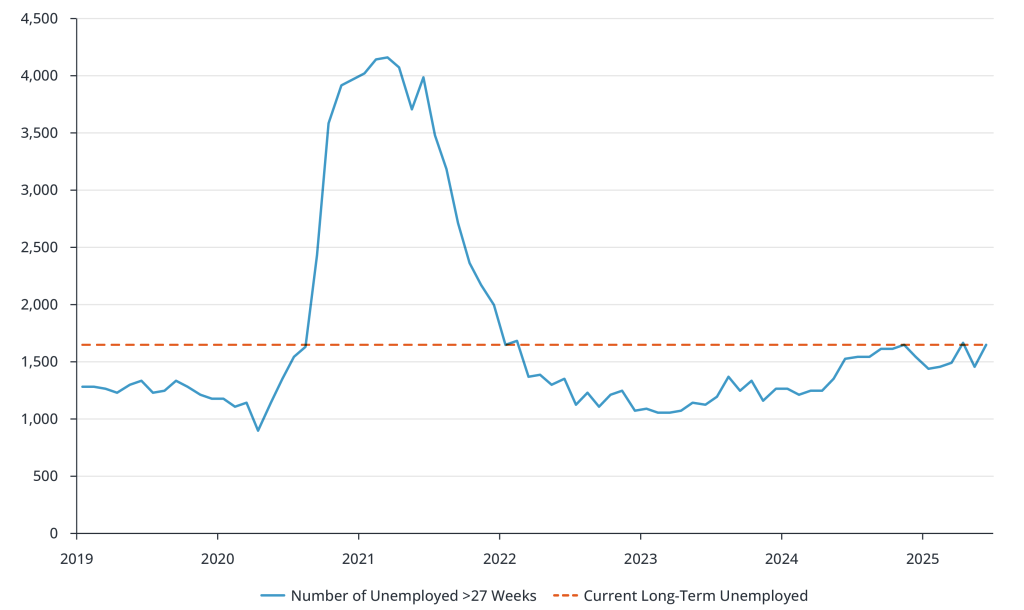
Three-fourths (76%) of the job gains in June were within just two sectors: health care and state government. Most sectors, therefore, are still afflicted by a hiring freeze as employers remain committed to maintaining their present headcount. High employment costs, economic uncertainty, and other headwinds mean that employers are holding off on workforce expansion until a clearer picture emerges and economic activity picks up. Similarly, while total job openings increased (helping reverse an otherwise steady decline), the new job listings were largely concentrated within the hospitality sector as those industries get ready for the summer seasonal uptick. Despite these gains, the increase in the number of long-term unemployed (up 160,000 in June) means jobs still aren’t becoming any easier to find for most as hiring remains heavily selective in nature.
The steady, but selective, jobs numbers are further dividing the labor market between a handful of winners and a growing multitude of others who are left on the sidelines. This division is not only frustrating for those out of work, but it’s also suppressing the staffing industry via lower labor churn and labor demand. While jobs are continuing to be created in the aggregate, temporary help services employment has remained largely stagnant this year. Even though the overall healthy nature of the labor market continues to help shield the broader economy from a downturn, it also means the Federal Reserve will further delay interest rate cuts. Without rate cuts and economic stability to stir labor market activity, the industry’s recovery will continue to idle.

While high competition among candidates means employers aren’t desperate for workers, staffing firms have an important role to play in helping employers find the right worker for their needs.
Despite growth in entry-level hiring, it is a challenging job market for recent graduates, according to the iCIMS Insights June 2025 Workforce Report. From May 2024 to May 2025, employers have only become more cautious as persistent inflation and high interest rates have been compounded by tariff activity. In this cautious environment, job applications rose 21% from year-to-year in May, while openings were unchanged and hires fell 8%.
The entry-level market fared slightly better, with hires up 6.6% year-to-year; however, this growth in hires failed to keep pace with a 22% increase in entry-level applications. The end result is that unemployment among recent college graduates was 5.8% in March (the latest data available)—the highest level in 12 years outside of the pandemic, according to the Federal Reserve Bank of New York.
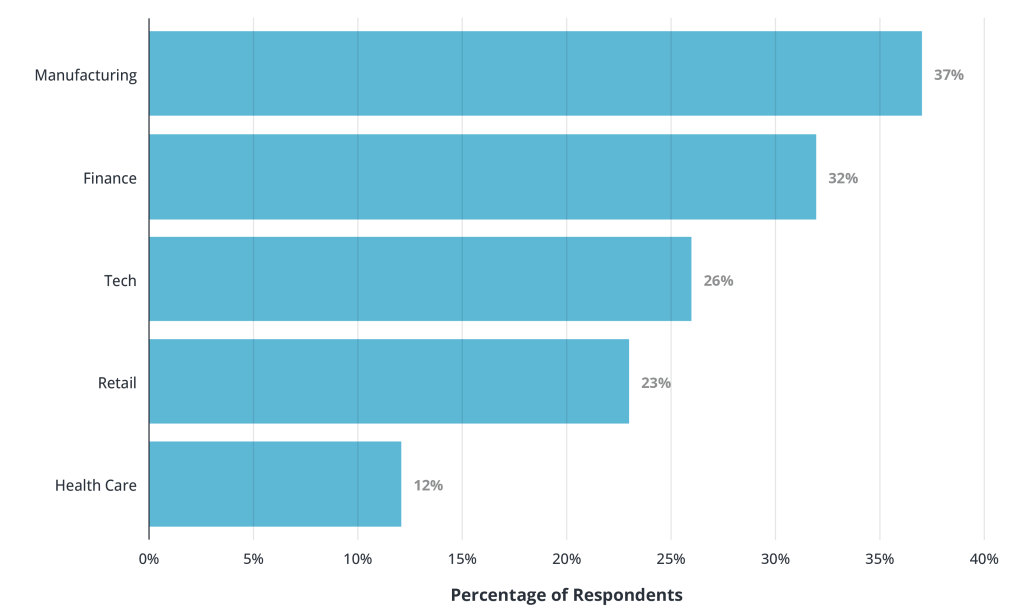
Competition for entry-level jobs increased across a range of industries, though to varying degrees. Manufacturing led the way with applications increasing 37%, followed by finance (32%), tech (26%), and retail (23%), with health care growing more slowly (12%).
While high competition among candidates means employers aren’t desperate for workers, staffing firms have an important role to play in helping employers find the right worker for their needs. Sifting through an increased volume of applications for the right employee may be a pain point, and experienced recruiters can help with that.
 Update for Jul 8, 2025
