2026 will be the first year where employers file taxes under the authorities of the One Big Beautiful Bill, which will probably enable them to save additional capital which can be invested in labor.
Noah Yosif

2026 will be the first year where employers file taxes under the authorities of the One Big Beautiful Bill, which will probably enable them to save additional capital which can be invested in labor.
For the better part of three years, the labor market has anticipated a recovery which has failed to materialize. And after the latest jobs report painted an even grimmer picture of labor market activity in 2025, it is difficult to see things getting any better. However, there are several significant tailwinds, expected to materialize this year, which will bolster job growth and hiring.
First, inflation is trending at lower levels than it has in the past three years, which means employers will face lower labor costs. Second, interest rate reductions enacted in 2025 are expected to take effect this year. This is in addition to further monetary policy accommodation expected later this year, which will also lower borrowing expenses for employers. Third, 2026 will be the first year where employers file taxes under the authorities of the One Big Beautiful Bill, which will probably enable them to save additional capital which can be invested in labor. Fourth, a deescalation in trade tensions compared to 2025 will provide employers with some more certainty over their future labor costs and ability to hire additional headcount.
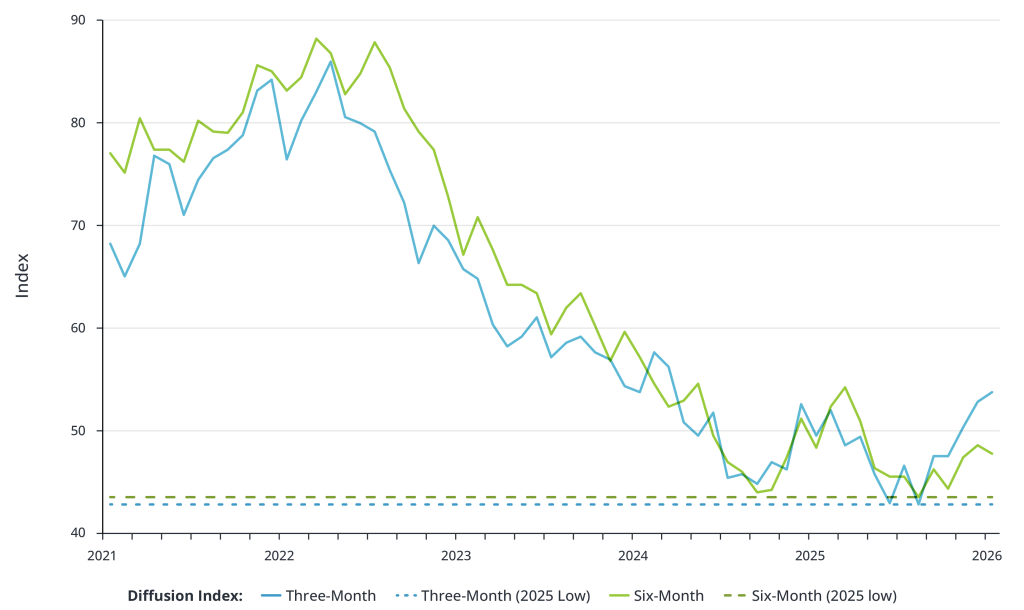
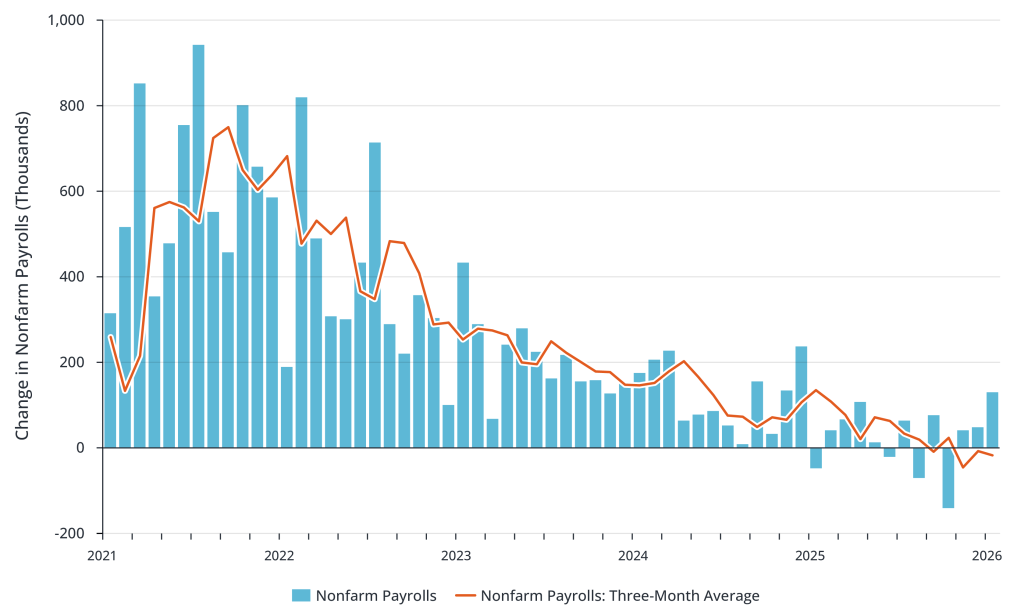
Unfortunately, it is still too early to tell whether the labor market is ready to embark upon its road to recovery. But January’s jobs report provided two helpful signals that are worth confirmation in future prints. First, an uptick in the Three-Month Diffusion Index suggest job gains are becoming less concentrated than they previously were. Second, post-revision, monthly nonfarm payroll gains suggest the labor market may have reached a bottom in the early winter of 2025. Again, it is much too early to tell whether labor market momentum is finally making a comeback, but if these trends prove to continue in 2026, then the aforementioned tailwinds might be providing employers with the confidence they need to start expanding headcount once again.

The most strategic path may be to focus less on breadth and more on depth: identifying where these tools genuinely fit within your company and cultivating where it can deliver meaningful value.
The AI boom continues to march on, and while there is much uncertainty about what impact the technology will ultimately have, what is clear is that it is certainly taking up space within the balance sheets of the economy. According to analysis from the St. Louis Federal Reserve: investment from AI-related components contributed 30% to total real GDP growth in 2Q2025, and has already surpassed the contributions from the equivalent dot-com boom from the early 2000s. Most business leaders (86%) plan to increase AI spending this year, according to data from Accenture, but curiously only 12% of them claim ROI as the primary influence for their decision to invest more in this technology. So, why the enthusiasm?
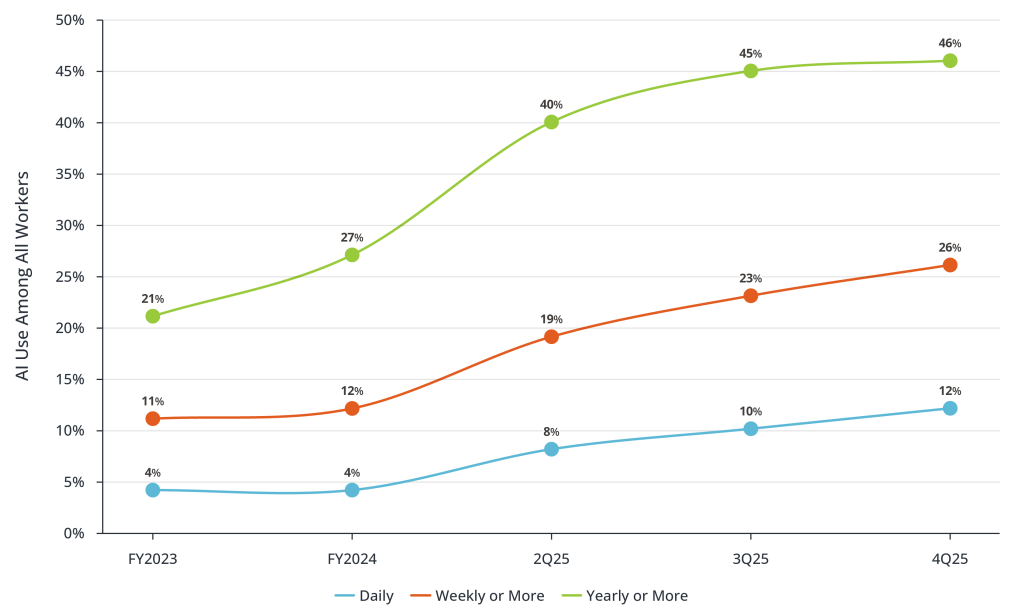
The foremost throughline is that businesses see AI as a strategic investment that will help them keep up with a technology that could possibly change the way the economy functions on a fundamental level. While the intention is prudent, the execution can seem muddled with little idea of how to best utilize it. While the automation potential of AI could be great, 78% of business leaders see its primary utility not in managing costs, but in growing revenue. Leaders also report more frequent AI use than other employees, a gap that has widened over time. According to Gallup: since 2Q2023, frequent AI use among leaders has risen from 17% to 44%. Over the same period, frequent use among managers has doubled from 15% to 30%, while frequent use among individual contributors has increased from 9% to 23%.
As adoption continues to increase, the question ahead will rely not just on whether firms adopt AI, but on which firms can meaningly integrate it into regular work. For staffing firms in particular, the challenge is to stay ahead of the AI curve without succumbing to hype-driven spending without a clear plan. The most strategic path may be to focus less on breadth and more on depth: identifying where these tools genuinely fit within your company and cultivating where they can deliver meaningful value.