While a rising wage premium for changing jobs might prompt more job seekers to try their luck on the labor market, they will still have to face a grueling selection process driven by employers’ economic necessities.
Noah Yosif

While a rising wage premium for changing jobs might prompt more job seekers to try their luck on the labor market, they will still have to face a grueling selection process driven by employers’ economic necessities.
Voluntary job seekers willing to quit their current positions for a new opportunity are difficult to find in today’s labor market and for good reason. At a time when employers have a multitude of reasons to be cautious about headcount levels, prospective job seekers are facing longer periods of ghosting, stringent hiring processes, misaligned job postings, and offers that often lag expectations. And for those lucky few fortunate enough to receive an offer, employers are still likely to provide fewer opportunities for promotion, tolerate less workplace flexibility, and expect more output from employees in the name of productivity.
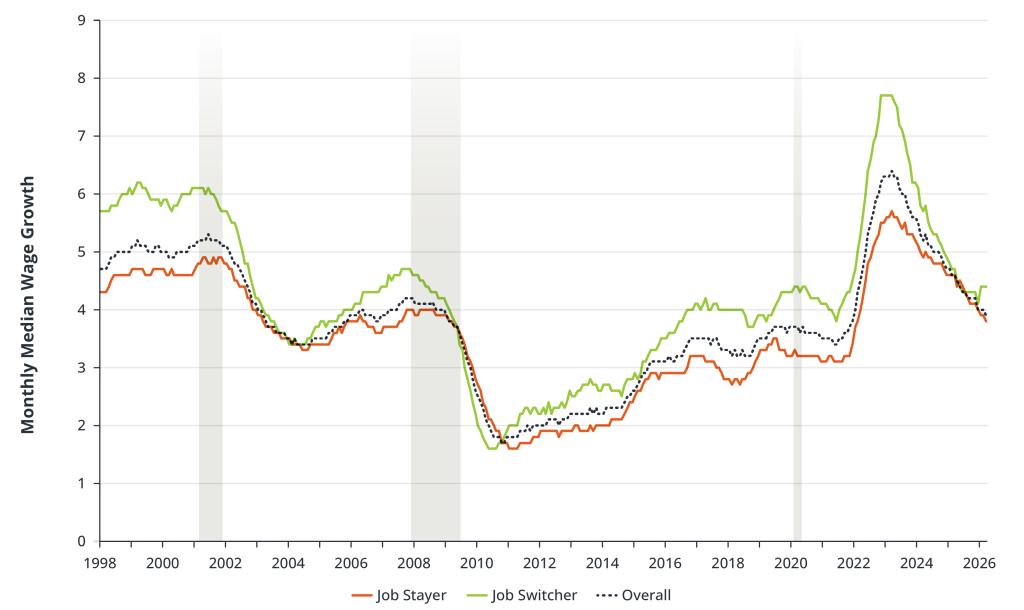
However, there is one growing benefit that could encourage more voluntary job seekers: higher wages. Over the past four months, the wage premium from changing jobs has risen faster than that from staying in the same position. This means that for the job seekers who complete the marathon to receiving an offer, they are likely to receive higher wages than they are earning their current role. Even though employers are hesitant to hire more workers, they are still willing to be competitive for the right talent.
While hiring continues to stagnate, employers continue to fill more than seven million open jobs. But unlike a few years ago, employers are more determined to get the right candidate in as few tries as possible due to an uncertain and precarious economic environment. So, while a rising wage premium for changing jobs might prompt more job seekers to try their luck on the labor market, they will still have to face a grueling selection process driven by employers’ economic necessities.

While this renewed period of volatility won’t leave the industry unscathed, staffing companies can at least have a rough idea of the scope and duration of the crisis that not only affects our industry, but the global economy as well.
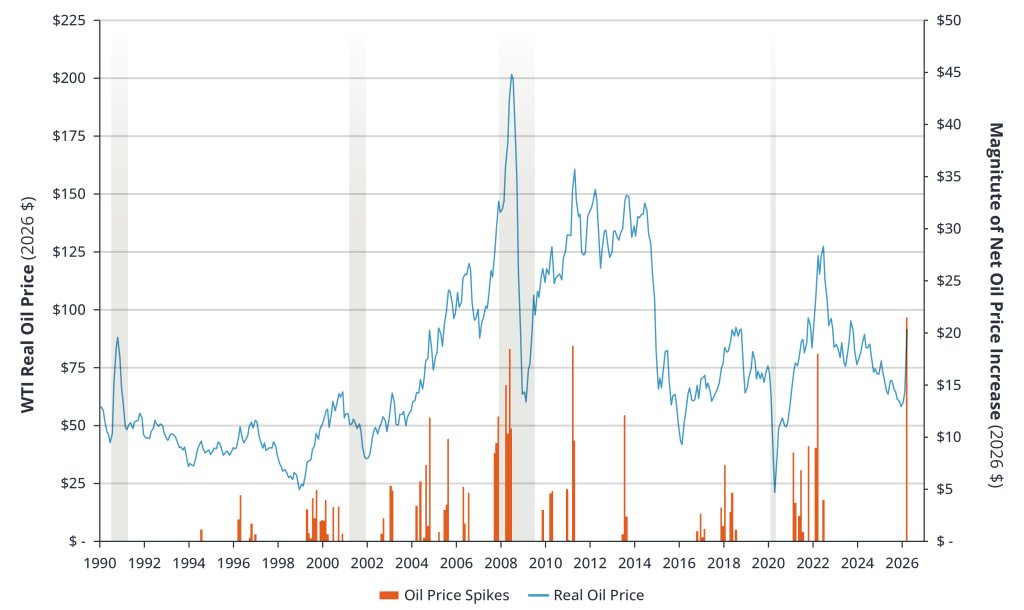
Last month saw the largest shock in over 20 years, with oil prices soaring $21.5 in March when compared to the maximum price recorded during the previous 12 months. A one-time spike higher than even the 2022 oil crisis triggered by the invasion of Ukraine. While this seems extreme it’s important to note that a sustained shock matters more than a one-off, as a proverbial flash in the pan can be easily absorbed by employers if the course then corrects. With the conflict already into its second month, however, it’s looking less unlikely that will be the case.
From analyzing data since 1990, ASA research has found that sudden spikes in oil prices have historically depressed staffing employment. The impacts of price spikes show up in the data some months after the spike occurs and lingers for 6-9 months afterwards, before largely dissipating after 12 months have passed. Considering the magnitude of the surge in March, it’s possible the impact on future staffing employment be as large as a 12% decrease in the temporary help services penetration rate by around September 2027. However, a couple of things make this outcome unlikely.
For starters, the relationship between oil price spikes on staffing employment used to be far greater in the past and has largely lost statistical significance after 2008. The economy’s primary energy intensity (oil and gas consumption per real dollar of GDP) in 2025 is half that it was in 1990 (from 8.2 to 4.0 thousand BTUs per 2017 dollar.) Volatility in oil prices matters greatly for operating costs, but for the staffing industry it is really the hiring environment that matters most for stability and future performance. While it is at historical lows, if the total hiring rate remains steady, which it largely has, then it will greatly offset the impact of this crisis as the labor market trudges on.
While this is positive for the resilience of the job market, staffing companies should know that the consequences of this crisis will take some time to filter down to the industry and when it does it will be felt even after the dust settles and the Strait of Hormuz fully reopened. However, it will be temporary, with the staffing industry largely reliant on labor market conditions, not on fluctuations within oil markets. While this renewed period of volatility won’t leave the industry unscathed, staffing companies can at least have a rough idea of the scope and duration of the crisis that not only affects our industry, but the global economy as well.