The week of August 14, 2025

Weekly Economic & Business Outlook

Latest Economic Outlook
  • Unemployment and layoffs remain low, indicating employers are holding onto existing workers but pulling back on new hiring
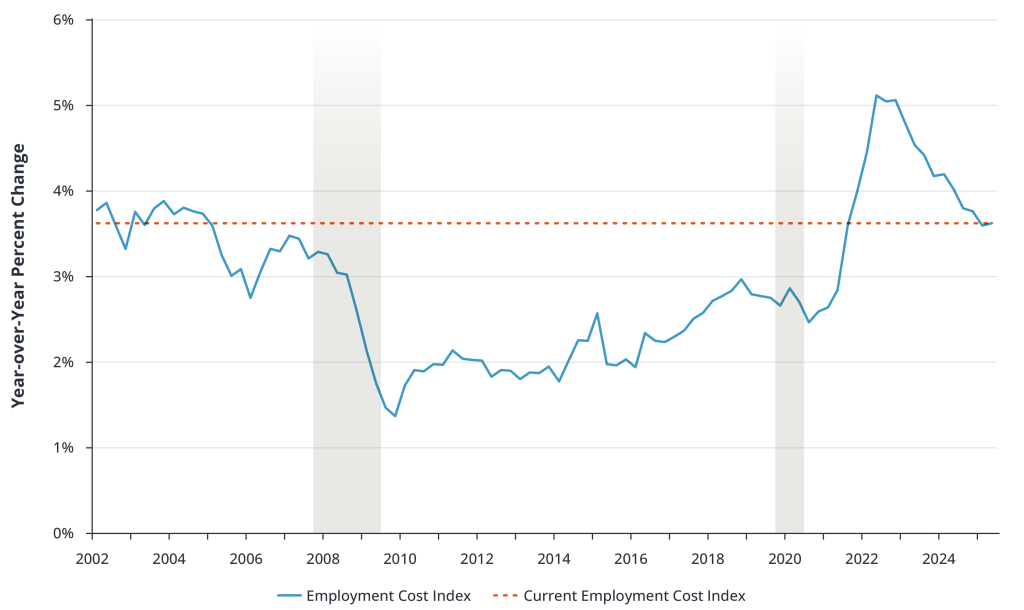
  • Labor costs have stagnated at high levels, driven by inflation, high interest rates, and tariffs
  • Until conditions improve—via rate cuts, trade deals, or reduced costs—businesses are unlikely to expand headcount
Latest Staffing Research
  • Many U.S. workers see an active social media presence as more likely to harm than help someone’s career
  • Gen Z workers see the potential upside outweighing the risks
  • Recruiters have an opportunity to use social media to connect with candidates, particularly in the younger generations

Weekly Economic Outlook

08/14/2025

Employers are still facing higher costs to onboard new employees, so while they are not parting ways with current personnel, as demonstrated by low levels of unemployment and layoffs, they are holding back on creating new jobs and hiring for those roles, ergo a substantial drop in nonfarm payrolls.

Noah Yosif

As Labor Costs Soar, Hiring Stays Scarce

Much of the current analysis over the labor market’s health has revolved around nonfarm payroll growth, which admittedly was much lower than many expected. But less discussed is the reason for this sudden decline, which was explained by data released one day earlier. Labor costs, measured by the Employment Cost Index, stagnated in the second quarter of 2025, holding at highs last seen just prior to the Great Resignation. This means employers are still facing higher costs to onboard new employees, so while they are not parting ways with current personnel, as demonstrated by low levels of unemployment and layoffs, they are holding back on creating new jobs and hiring for those roles, ergo a substantial drop in nonfarm payrolls. 

There are three drivers behind today’s labor costs. Inflation, which proved to have stagnated this very week, is raising compensation demands among employees who would, naturally, seek to maintain their standard of living. The Federal Reserve has delayed reducing interest rates, which has raised the cost of borrowing money and, effectively, making the necessary investments into headcount through both salaries and benefits. Third, tariffs are raising operating costs, which is also detracting from the funds that companies could devote towards labor. The stagnation in labor costs suggests that companies may still not be ready to make long-term personnel decisions until headcount can be onboarded at a cheaper rate. While tailwinds like additional trade deals and the One Big Beautiful Bill are expected to ease operating costs and improve the capital businesses have on hand, they will take time to be fully realized, meaning that the labor market will likely remain frozen for the time being.


Employment Cost Index

Employment Cost Index
Source: U.S. Bureau of Labor Statistics

Weekly Staffing Research Outlook

08/14/2025

Sharing experience-based insights about finding a job or hiring highlights recruiters as thought leaders and may help build pipelines.

Tim Hulley

Career Connections: Making Use of Social Media

Social media has become an integral part of the discourse around work, with opportunities and pitfalls for workers and employers alike. On the one hand, the latest ASA Workforce Monitor® survey found that 44% of U.S. adults believe an active social media presence is more likely to hurt a person’s career than help, compared with 37% who feel the opposite. 

Among Gen Z workers—which by the end of 2025 are expected to make up 27% of the global workforce—the results flip: Half see the potential for social media to help someone’s career, while 38% believe it is more likely to do harm. Moreover, 56% of Gen Z workers believe their social media presence has helped their own career—more than any other generation.

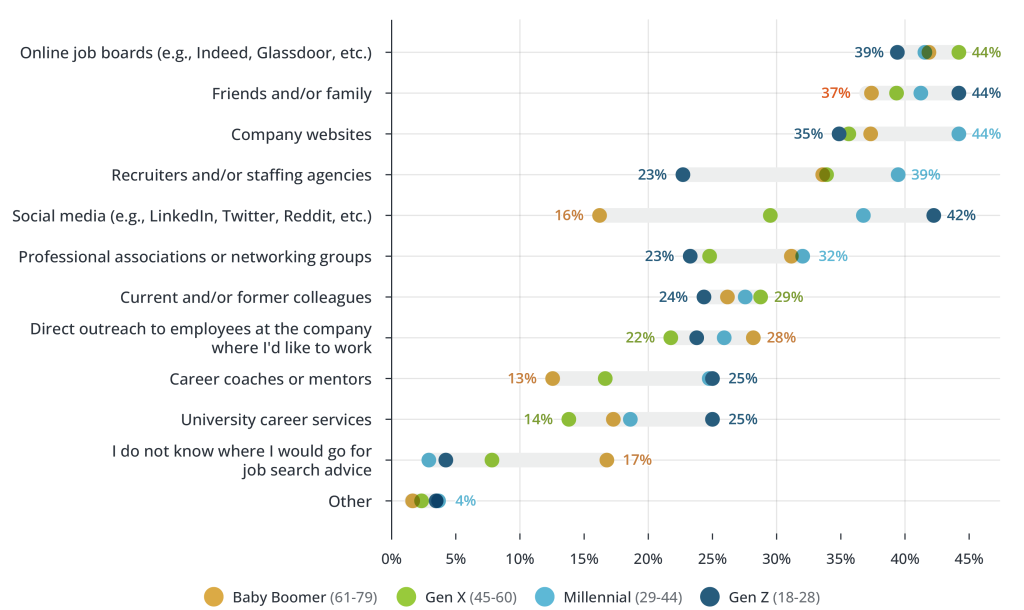
One important way social media can play a role in the job search is as a resource to job seekers looking for advice about topics such as where to look for jobs, their résumé, interviewing, or salary negotiation. This is especially true among Gen Z, for whom social media was the second-most popular source (42%) behind friends and family (44%), according to the most recent ASA Workforce Monitor survey. At the same, recruiters and staffing firms were less top-of-mind as a resource for Gen Z than for other generations.

In the ever-changing job market, social media provides an opportunity for staffing professionals seeking to connect with candidates or clients alike. Sharing experience-based insights about finding a job or hiring can position recruiters as thought leaders and may help build pipelines.

Sources of Advice for Job Hunting, by Generation

Sources of Advice for Job Hunting, by Generation
Source: ASA Workforce Monitor

Economic Calendar

Real Time Economic Calendar provided by Investing.com.
Staffing in 60 Seconds
Update for Aug 14, 2025
Past Issues
Loading Issue...
Meet the Research Team
  • Noah Yosif
  • Tim Hulley
  • Max Aldrich
    Max Aldrich