The week of March 25, 2026

Weekly Economic & Business Outlook

Latest Economic Outlook
  • Concern over a weakening labor market has more to do with a decline in churn than an increase in the number of unemployed.
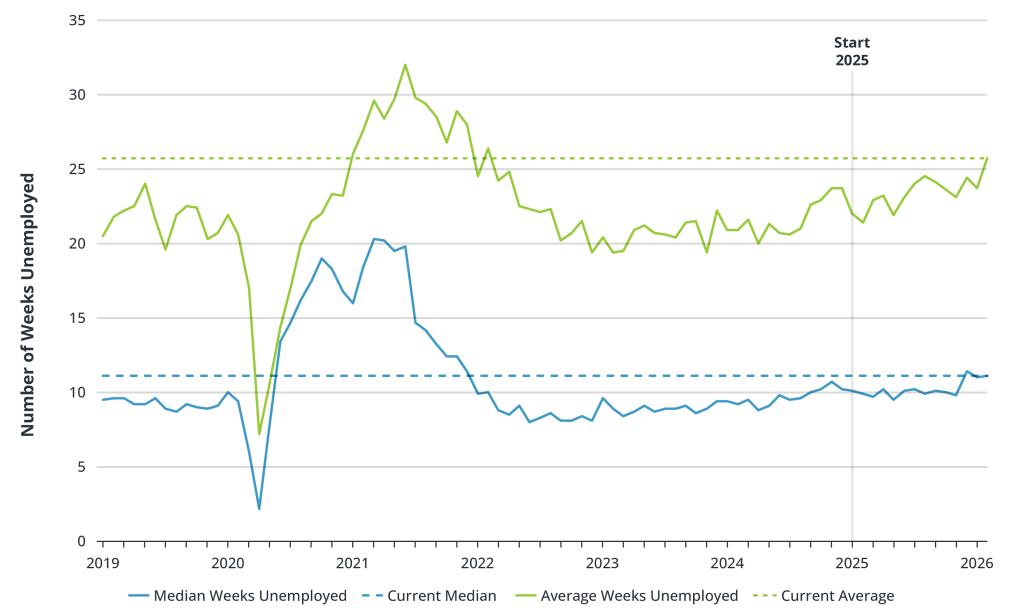
  • The duration of unemployment has increased while the unemployment rate has held largely steady.
  • The Fed says the labor market is in a mostly satisfactory state, predicting that unemployment will edge down.
Latest Staffing Research
  • Job seekers are contending with longer searches and a highly competitive market.
  • Networking is regarded by job seekers and hiring managers alike as a crucial part of the job search.
  • Online networking methods such as social media are valuable, but so are in-person methods.

Weekly Economic Outlook

03/25/2026
Max Aldrich

With fresh uncertainty including a market-moving oil supply shock, this is unlikely to change in the short term. Staffing firms should note that lower turnover and longer placement times may continue in this labor market, with clients being discerning and conservative about the value they would gain from taking on another employee.

Max Aldrich

If the Labor Market Is Weakening, How Can Unemployment Be Low?

Staffing companies have had to deal with a steadily deteriorating labor market for several years now. However, in the eyes of the Federal Reserve, the labor market is still quite robust. This is not a contradiction, as the current unemployment rate of 4.4% is close to its ideal value of 4.0%—yet jobs are hard to come by as the total hiring rate is closer to what it was after the Great Recession than what is expected during normal economic times (3.3% in January 2026 vs. 3.9% normally).

According to the most recent estimates from the Fed, joblessness is expected to change little this year, with unemployment holding at 4.4% before edging down to 4.2% by the end of 2027. The Fed has also commented that most (between 50% to 75%) of the inflationary pressure within the economy right now is driven by tariffs. The Fed says tariffs are causing a one-time upward jolt in prices and that pressure will gradually fade away as time passes; however, this is threatened by the uncertain future of trade policy. With unemployment considered largely under control, some experts expect that the Fed might have to raise rates this year in response to the global energy crisis stemming from disruption in the Middle East. While this is unlikely, it is a possibility.

That may not be much consolation to current jobseekers or to staffing companies. Both the average and the median duration of unemployment have increased to sit above prepandemic levels as candidates find it harder to re-enter the workforce due to the historically low hiring rate—and lower turnover means fewer opportunities for staffing companies to help clients. With fresh uncertainty including a market-moving oil supply shock, this is unlikely to change in the short term. Staffing firms should note that lower turnover and longer placement times may continue in this labor market, with clients being discerning and conservative about the value they would gain from taking on another employee.


Recent Unemployment Rate Trends

Recent Unemployment Rate Trends
Source: Bureau of Labor Statistics

Weekly Staffing Research Outlook

03/25/2026

While AI and automation offer benefits to recruiters and job seekers alike, staffing professionals have an opportunity to continue lending their personal touch to help job seekers stand out, and hiring managers find workers with the right skills.

Tim Hulley

The Importance of Networking in 2026

Four in 10 workers planned to look for a new job in 2026, according to research from Robert Half. At 38% in December 2025, this marks an increase from 27% in July and 29% in December 2024. However, job seekers are up against challenges. A separate survey found that most job seekers expect the job search to take longer than previous searches (68%) as they contend with too many other applicants and competition for positions (59%).

Many job seekers have turned to AI to assist in a challenging job search, but this leads to problems of its own. As AI makes it easier to apply to jobs, 84% of human resource teams report heavier workloads, according to a survey of hiring managers by Robert Half. In particular, it has become more difficult to verify whether candidates actually have the skills contained in their résumés. This has led to increased steps such as more time reviewing applications, a growing number of interviews per applicant, and revising job descriptions to discourage AI-generated responses.

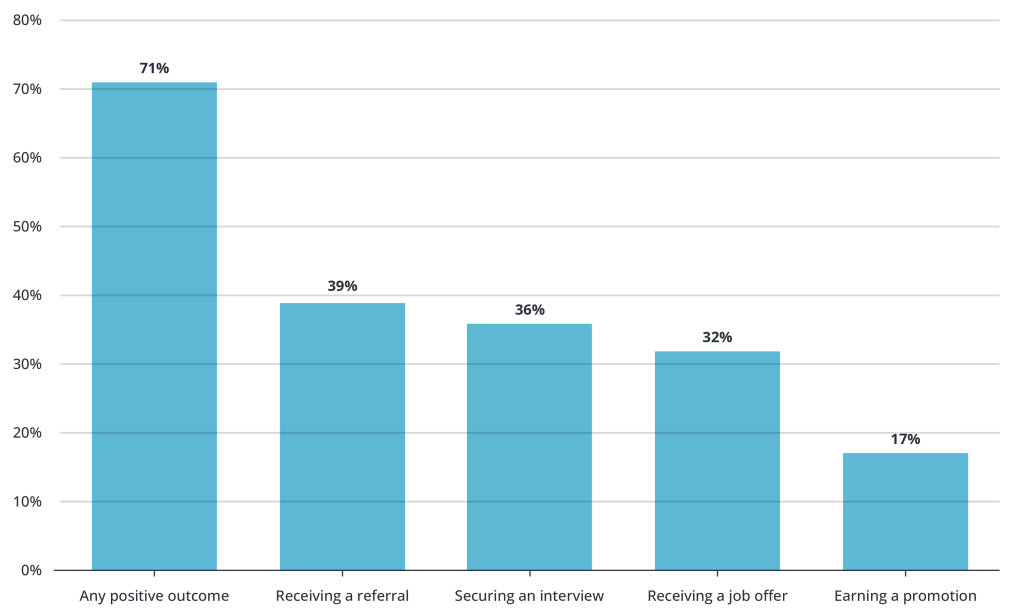
In this environment, job seekers (84%) and hiring managers (92%) agree that networking is an important part of a successful job search, according to research by Express Employment Professionals. While online methods, such as LinkedIn or Meetup (73%), cold outreach through email or social media (62%), and virtual events and webinars (59%) are popular means of putting oneself out there, so are in-person methods such as conferences and meetups (66%) and coffee chats or dinners (65%). Overall, 71% of job seekers surveyed report positive outcomes from networking, such as receiving a referral, landing an interview or job offer, or earning a promotion. However, 59% say they do not know the places or websites to network within their field.

While AI and automation offer benefits to recruiters and job seekers alike, staffing professionals have an opportunity to continue lending their personal touch to help job seekers stand out, and hiring managers find workers with the right skills.


Share of Job Seekers Who Say Network Has Led To...

Share of Job Seekers Who Say Network Has Led To...
Source: Express Employment Professionals

Economic Calendar

Real Time Economic Calendar provided by Investing.com.
Past Issues
Loading Issue...
Meet the Research Team
  • Noah Yosif
  • Tim Hulley
  • Max Aldrich
    Max Aldrich