While investors may celebrate immediate cost reductions, the broader economy suffers twice—first through lost wages and reduced consumer spending, and then again when the anticipated efficiency improvements fail to appear.
Noah Yosif

While investors may celebrate immediate cost reductions, the broader economy suffers twice—first through lost wages and reduced consumer spending, and then again when the anticipated efficiency improvements fail to appear.
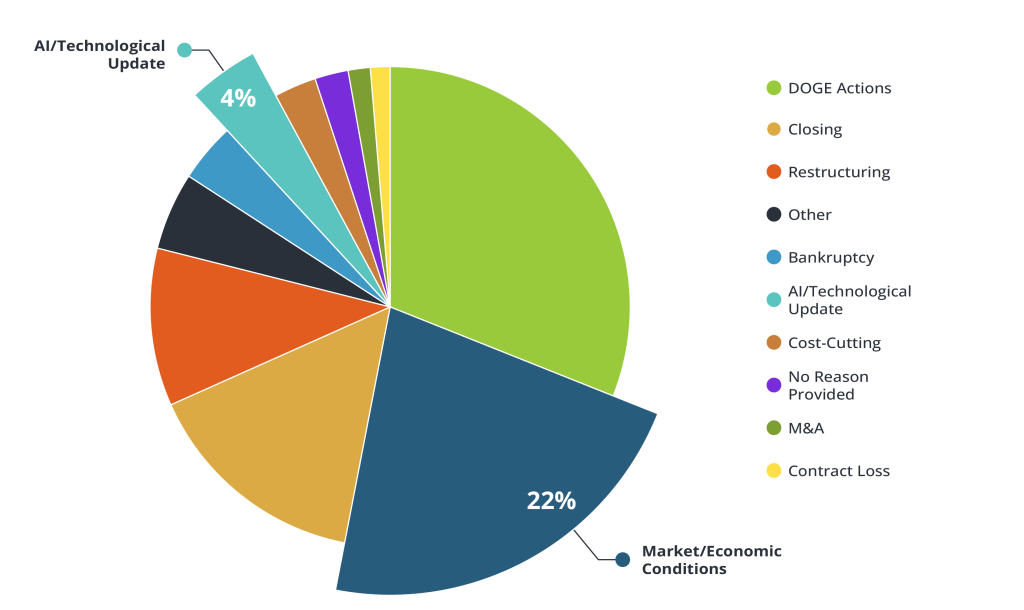
CEOs often frame layoffs as a consequence of artificial intelligence (AI), suggesting technology is rapidly replacing human workers. However, the evidence tells a much different story: Most companies are not yet seeing meaningful returns from AI, and the real driver of workforce reductions is financial pressure. Rising wages, elevated interest rates, and increased operating costs are forcing firms to make difficult decisions about sustaining headcount. Recent data shows only 4% of 2025 layoffs are attributed to AI, compared with 22% caused by adverse economic conditions.
At times, AI serves as a convenient explanation for cuts made in response to tough economic conditions. But it also runs the risk of selling empty promises to desperate companies that may never fully realize the productivity gains they are expecting. Studies show 10% of companies are receiving major returns from AI deployment, while 60% have realized little revenue as well as rising costs, despite substantial investments in such technologies.
By reorganizing their workforce around productivity gains which have yet to materialize, companies are putting the horse behind the cart. This is an expensive form of speculation. Cutting staff before technology demonstrates tangible results undermines institutional knowledge and destabilizes operations for the sake of appearances. While investors may celebrate immediate cost reductions, the broader economy suffers twice—first through lost wages and reduced consumer spending, and again when the anticipated efficiency improvements fail to appear. Placing livelihoods at risk based on projected returns is less a bold strategy than a gamble on hope.

Organizational confidence, culture, compensation satisfaction, and labor market outlook are all important factors that could contribute to a candidate’s reluctance to choose a new role.
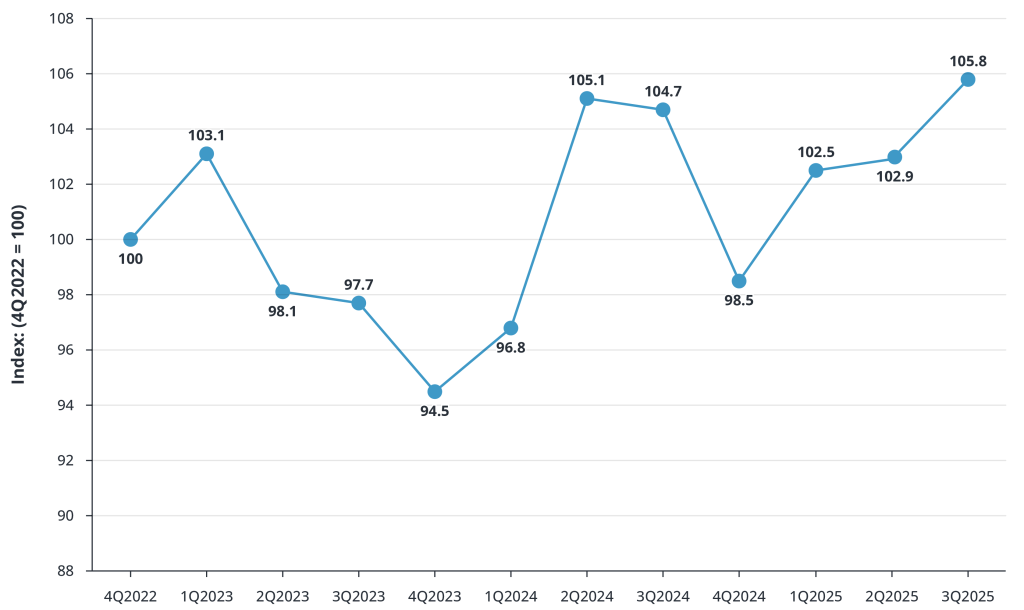
Workers exhibited a higher preference to stay in their current jobs in the third quarter of 2025, according to the Eagle Hill Consulting Employee Retention Index. Calculated based on employee survey responses to four indicators including organizational confidence, culture, compensation, and perceived job market opportunity, a higher value reflects greater likelihood among workers to stay in their role. Notching its third consecutive gain, the index reached a record high of 105.8 in 3Q2025, suggesting that workers expect to stay put over the next six months.
Millennials surged to a new record high of 114.2, while Gen Z was flat but elevated. Baby Boomers grew somewhat, but Gen X dropped. By gender, men exhibited higher propensity to stay overall, but the reading has declined for two straight quarters. The index has grown among women for four straight quarters.
All four of the indicators rose, but compensation led the way as it climbed 6.5 points to reach a record high of 109.9. Here, too, there were wide disparities among different groups. The retention index among men grew 4.7 points to a lofty 120.2, while the indicator trailed among women at 97.4 despite growing 7.0 points from the prior quarter. By generation, Millennials surged 11.8 points to lead the way at 119.1, while Gen Z edged down 0.9 points to 118.0. Gen Z fell 1.7 points to 99.5, as Baby Boomers grew 7.2 points to 93.0.
Organizational confidence also reached a record high, as it climbed 3.2 points to 104.7, reflecting growing trust in the capacity of company leadership to navigate through challenging periods. This trend is particularly evident among Gen Z and Millennials, and less so among Gen X and Baby Boomers.
High interest rates and economic uncertainty have acted as headwinds for the labor market and fostered a low-hire, low-fire environment, but these aren’t the only variables suppressing turnover. Organizational confidence, culture, compensation satisfaction, and labor market outlook are all important factors that could contribute to a candidate’s reluctance to choose a new role.
 Update for Nov 6, 2025