While the immediate impact may be muted, staffing firms could benefit from renewed client interest in taking on temporary workers.
Max Aldrich

While the immediate impact may be muted, staffing firms could benefit from renewed client interest in taking on temporary workers.
Despite the consistent uptick in core inflation (from 2.8% in May to 3.1% in August) the Federal Reserve is widely anticipated to lower interest rates this week to stimulate a job market which recently has been struggling to add any jobs at all. Both sides of the Fed’s dual mandate, price stability and full employment, are clearly under threat, but the scales now appear to be firmly tipping toward the employment side of the mandate. While the effects of rate cuts take time to ripple throughout the economy, it will nonetheless positively bolster investor and consumer confidence which could help reignite client appetites for hiring.
This policy pivot blows a new tailwind for the staffing industry. Lower rates tend to boost employment as they encourage firms to take on new headcount—especially in sectors more sensitive to borrowing costs such as the industrial sector. While the immediate impact may be muted, staffing firms could benefit from renewed client interest in taking on temporary workers, especially if economic uncertainty persists and dissuades employers from committing to permanent workers.
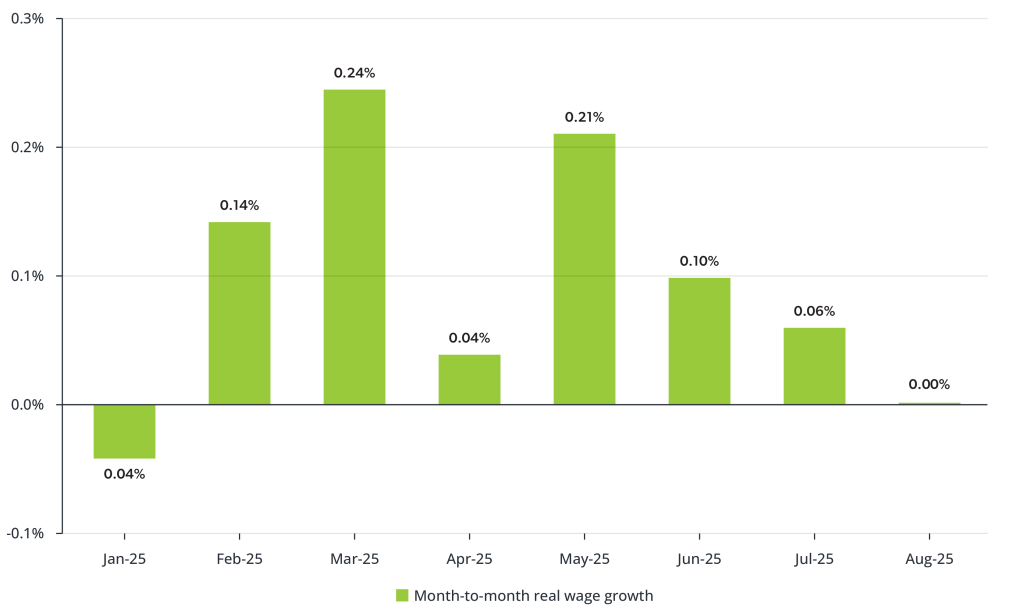
However, the Fed pivoting toward employment does not mean inflation is now in the rearview. Real wage growth for production and nonsupervisory workers (who account for roughly 80% of the workforce) has been declining since May, hitting zero growth in August. This erosion in purchasing power could dampen consumer spending and even help keep labor costs high as wage inflation pressures persist, potentially offsetting some of the gains from monetary stimulus. A great part of the Fed’s move hinges on whether lower rates can kick up enough economic activity to counterbalance the continued drag from inflation.

Evaluating lines of communication and keeping them open is a powerful tool in addressing worker job security fears, especially at organizations that may have already experienced layoffs.
Stress over layoffs can be a challenge for businesses, as layoff worry among workers can impact performance and reduce morale. In fact, instability in a range of industries can lead to workers operating under a perceived threat of layoffs, a state which can negatively impact decision making, relationships, and physical health, according to Psychology Today.
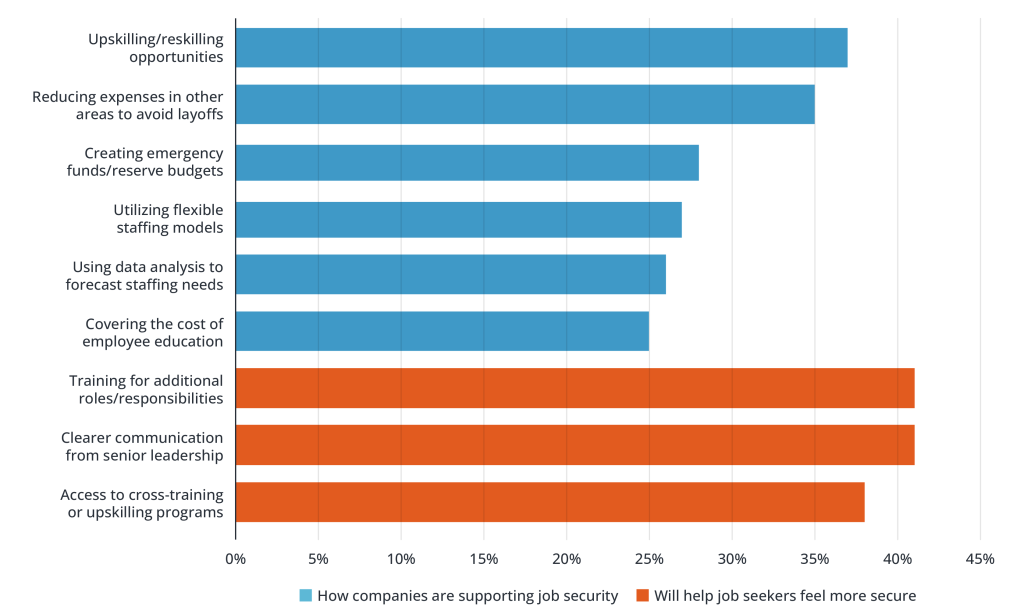
New research from Express Employment Professionals highlights rising concerns about layoffs, despite employers taking efforts to enhance job security. According to the June survey, 46% of hiring decision makers say their staff are more concerned about job security than they were a year ago, even as most are confident in their ability to provide short and long term job security for their workers, with 87% taking measures such as providing upskilling or reskilling opportunities (37%).
One important tool in managing layoff stress among workers is communication. In a survey of job seekers by Express Employment Professionals, nine in 10 reported that they would feel more secure working for a company that clearly communicates its future, but only one in three report an environment of consistent and transparent sharing from leadership.
For communication, the messenger is crucial. In a Firstup survey of non-managerial employees whose firms had undergone layoffs, 86% rely on their direct managers to explain what company updates might mean for their role, and 52% say their direct manager is their most trusted source for company updates.
The staffing industry has been hit hard over the last several years, and many firms have had to make tough decisions. Evaluating lines of communication and keeping them open is a powerful tool in addressing worker job security fears, especially at organizations that may have already experienced layoffs. Instilling confidence among employees can help shore up morale and allow them to focus on delivering quality work.
 Update for Sep 17, 2025
